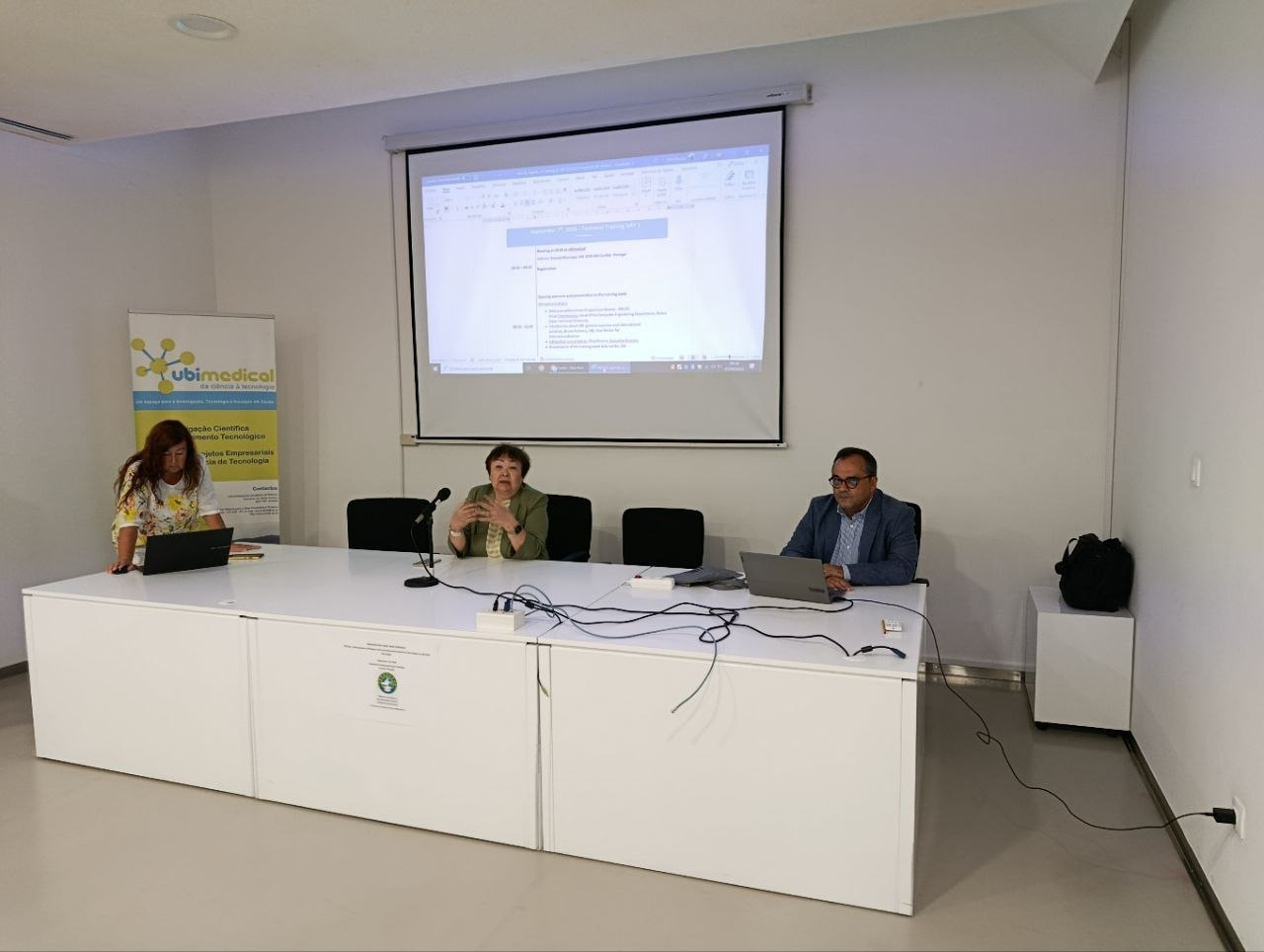
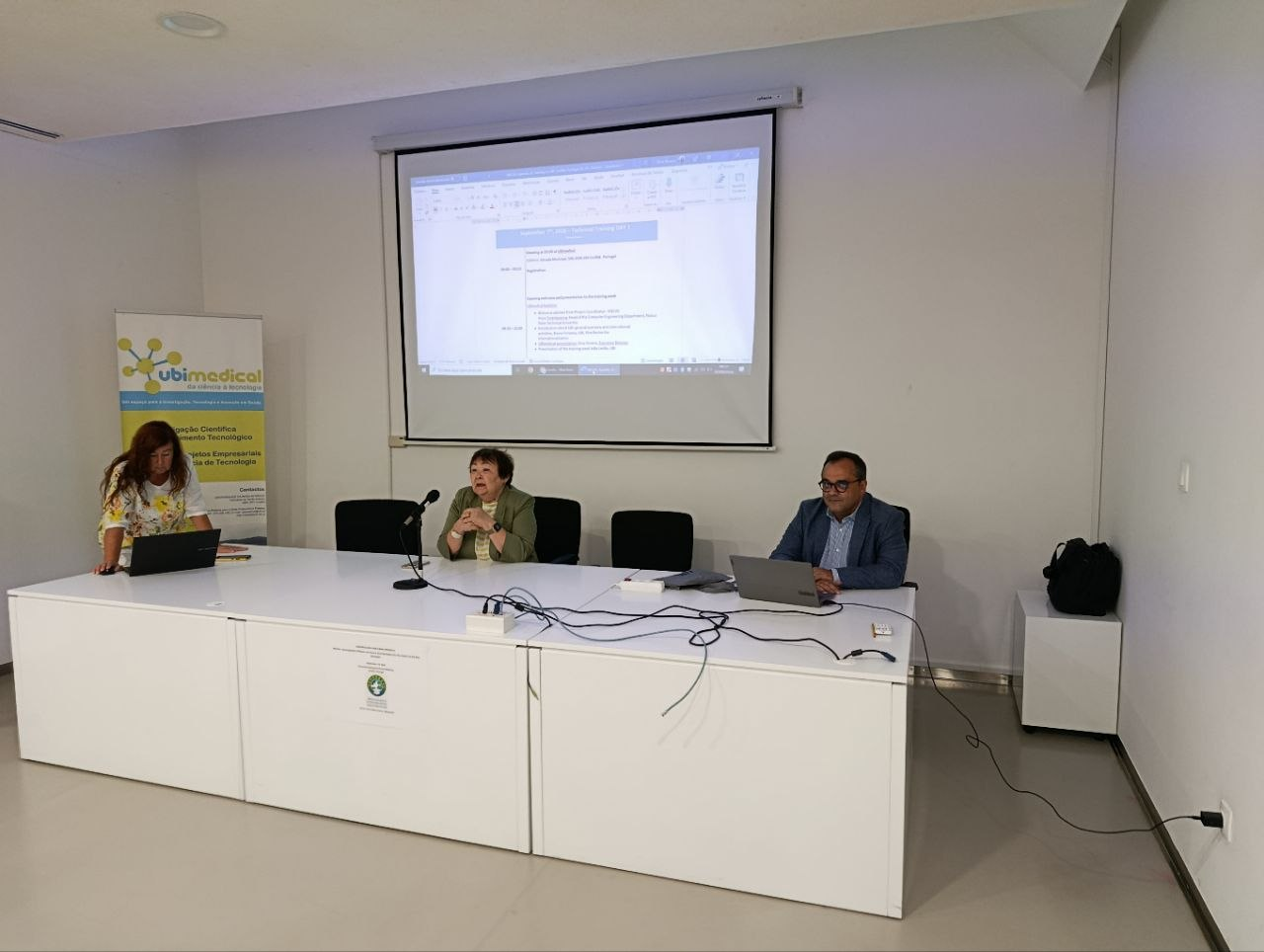
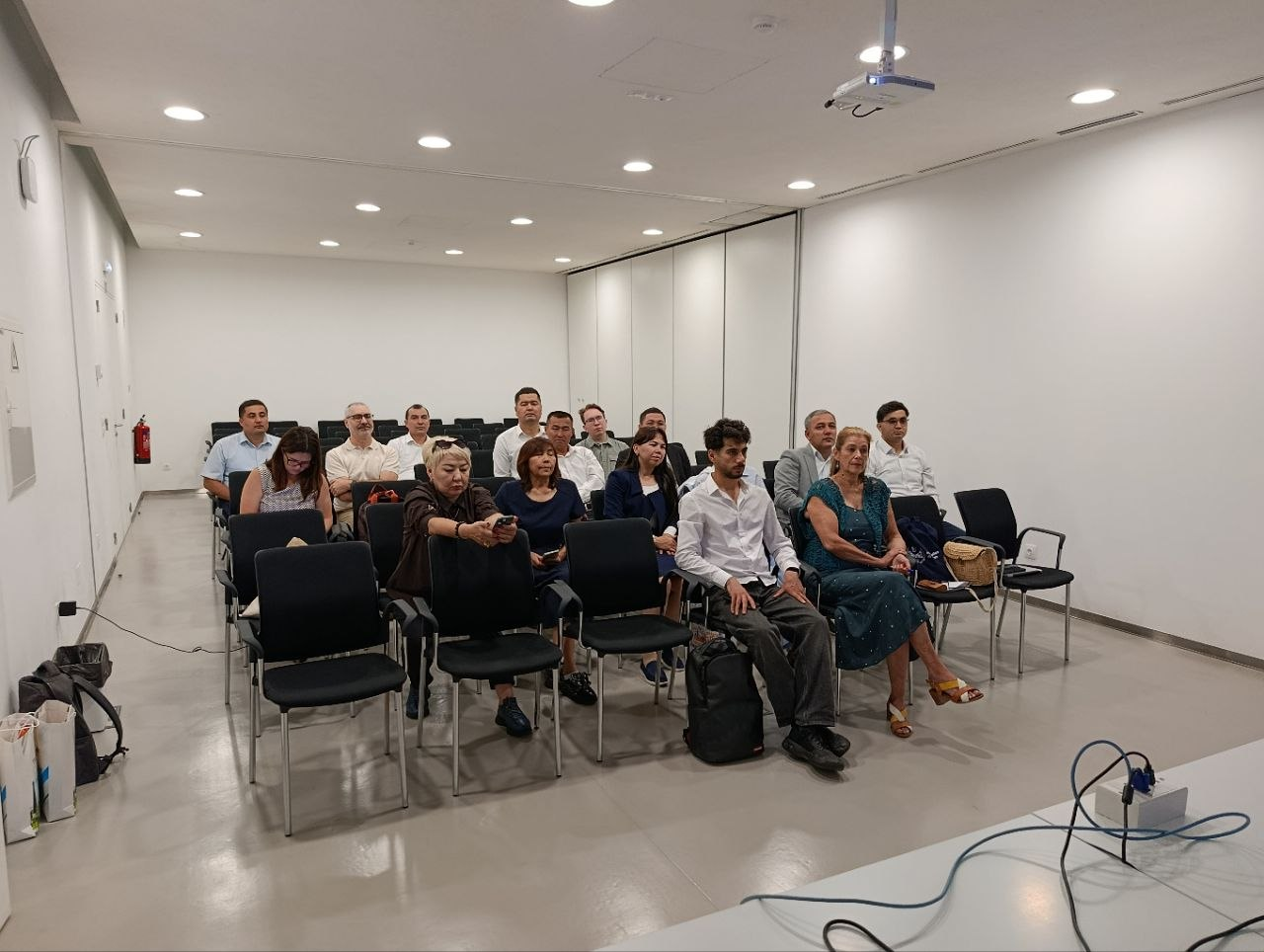
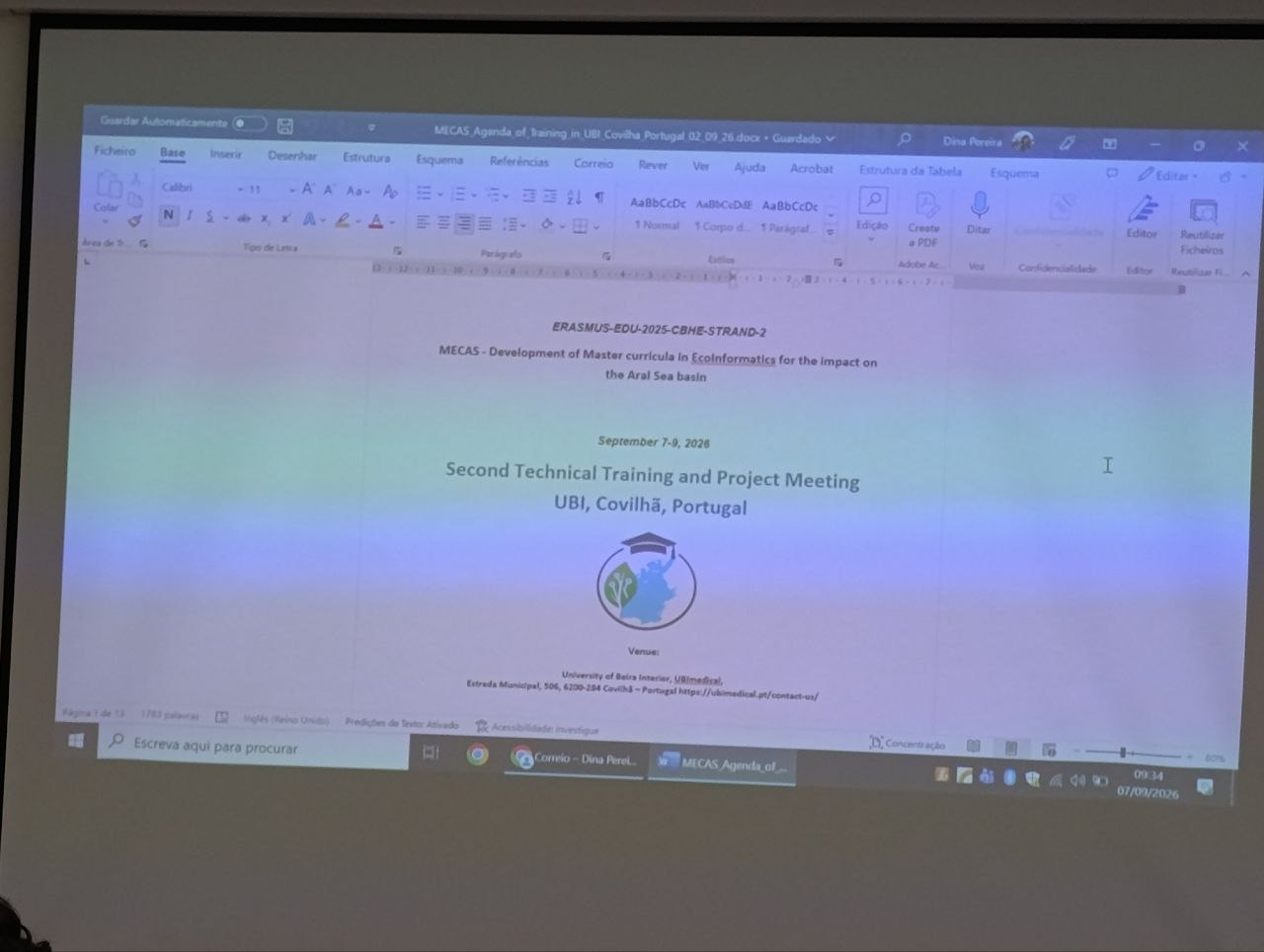
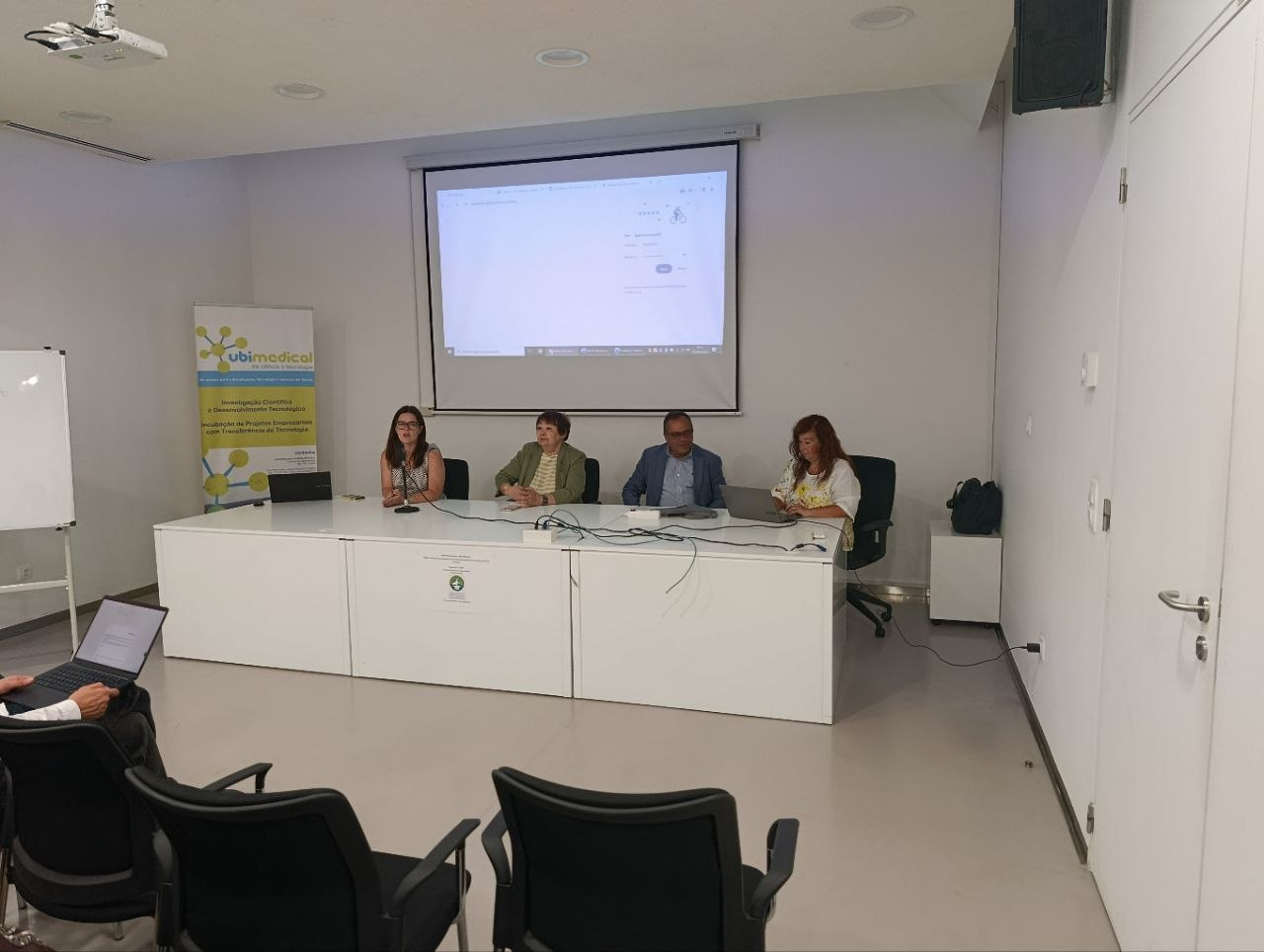
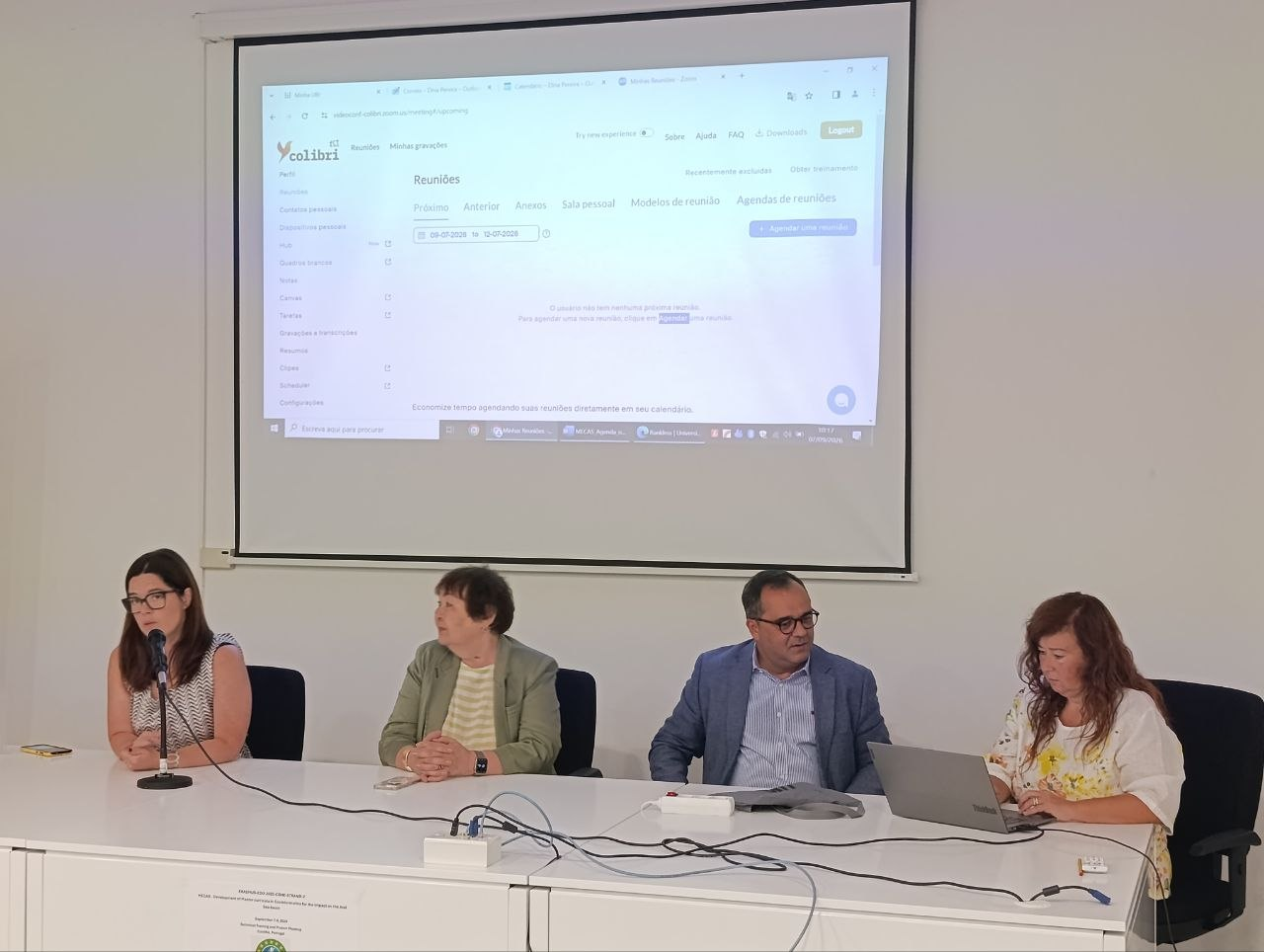
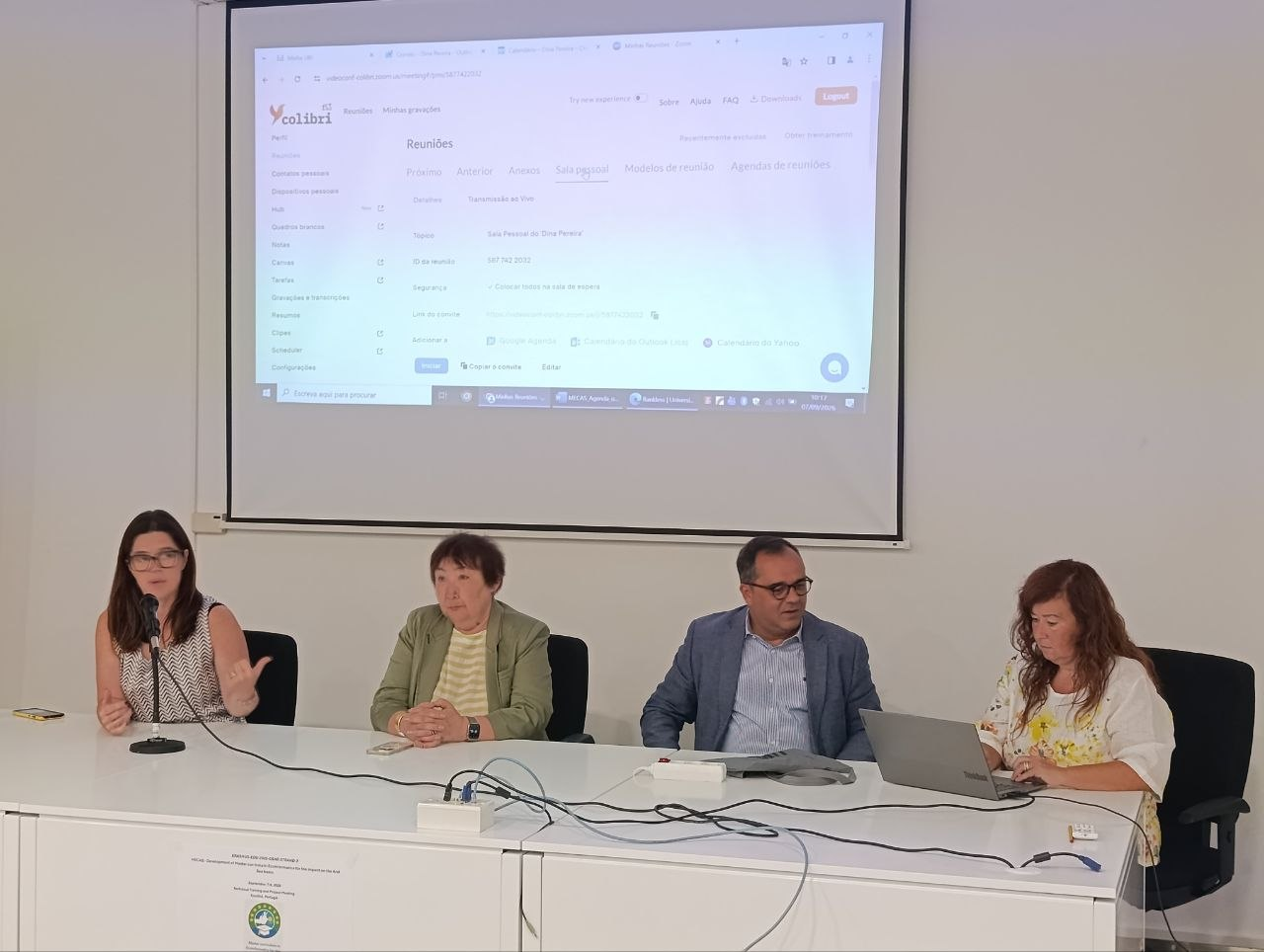
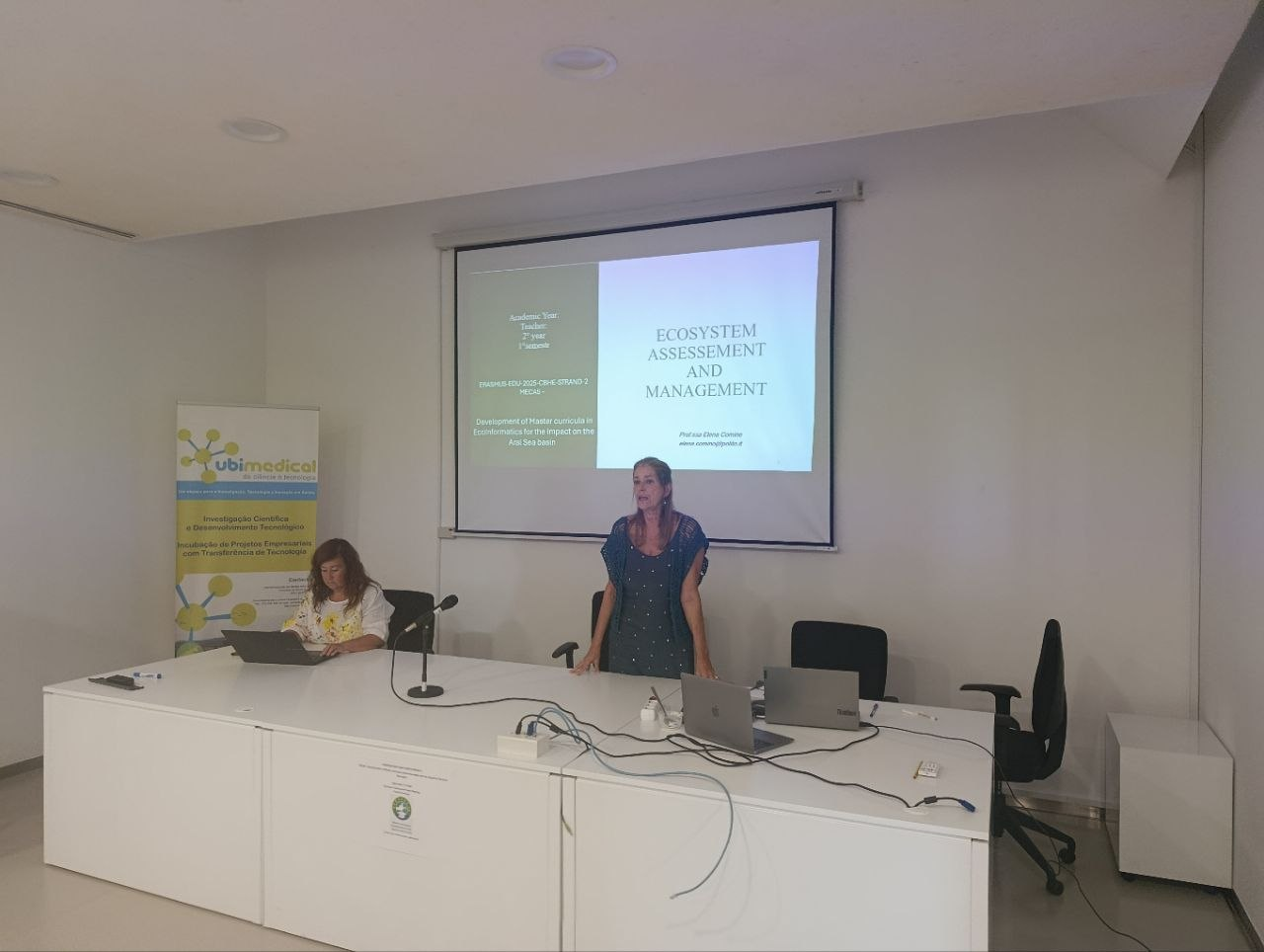
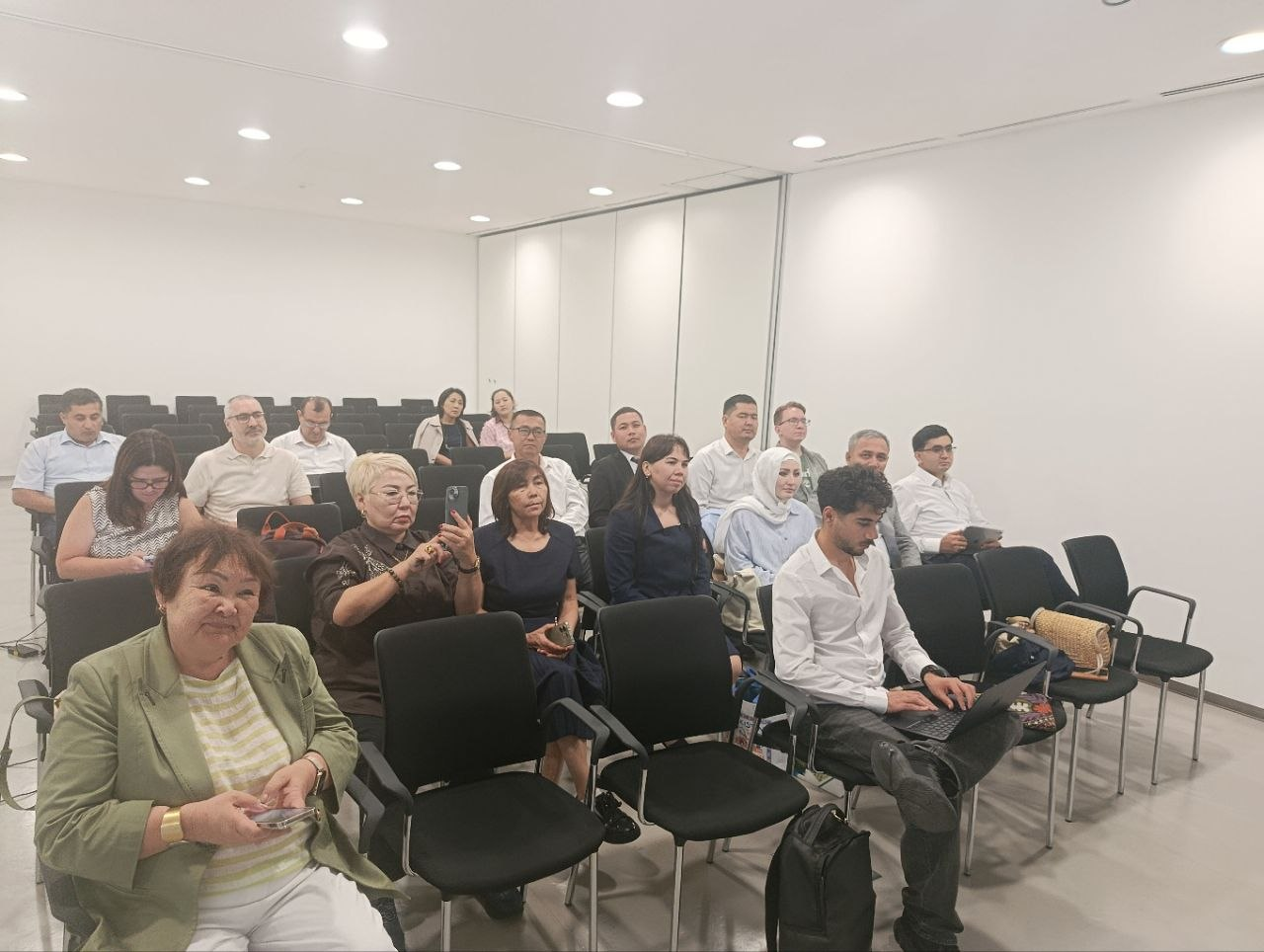
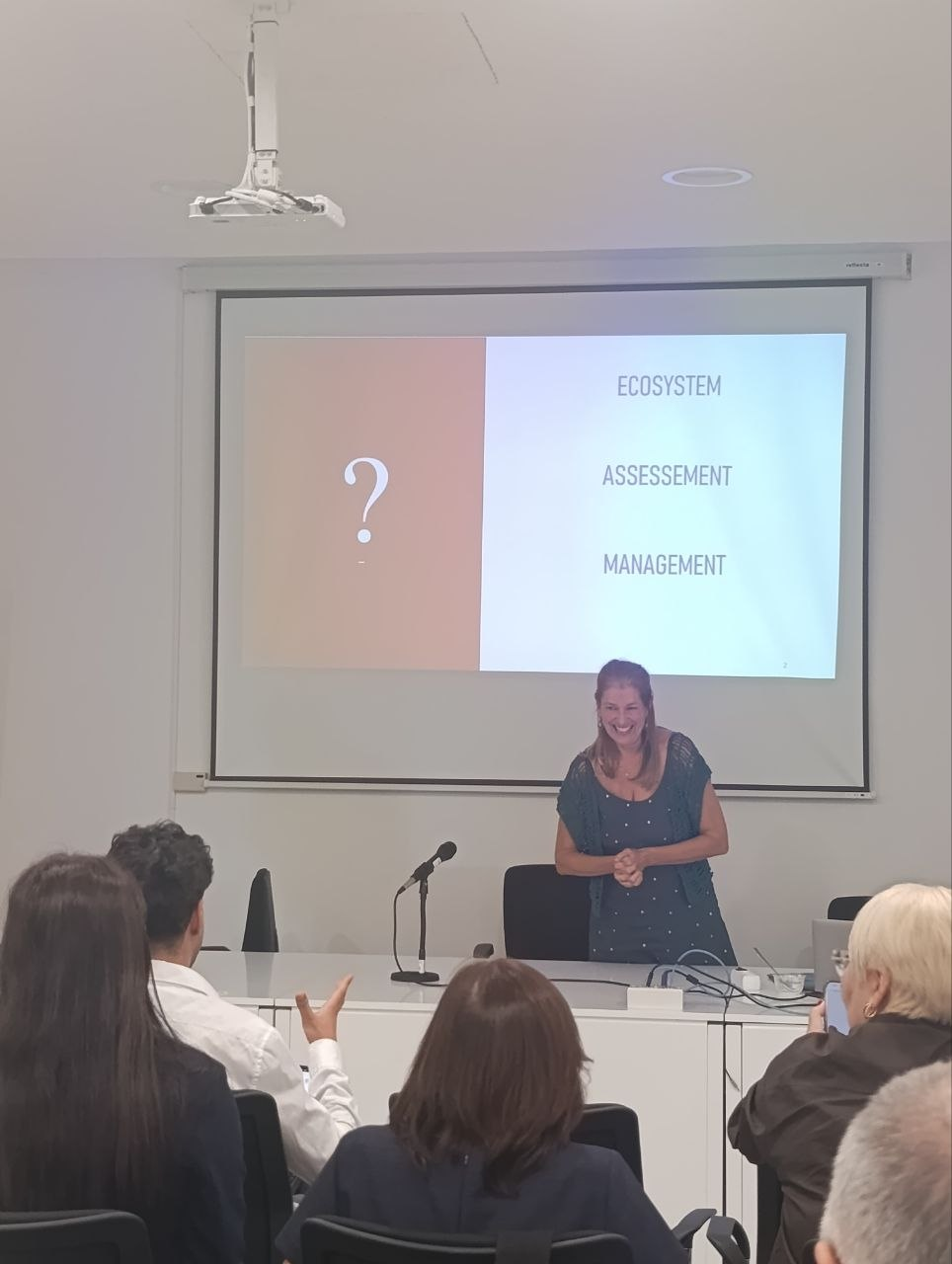
The event, which will run from September 7 to 9, is being organized at the UBImedical Center of the University of Beira Interior (UBI). Representatives of partner higher education institutions and organizations from Uzbekistan, Kazakhstan, and European countries participating in the MECAS consortium are participating in it.
Training sessions are conducted both offline and online, with options for participation. During the training sessions, presentations, theoretical and practical classes, discussions and Q & A sessions on the training modules under development for the future Master's program of Ecoinformatics are being organized.
Day One: Modern Modules in Ecoinformatics
The first day of the training began with opening and introductory presentations by the MECAS project coordinator, representatives of the University of Beira Interior and UBImedical.
As part of the September 7 program, training is conducted on Numerical Ecology, Citizen Science Green Application, Using GIS in Aquatic Economonitoring, and R Programming in Ecology modules.
Within each module, topic-related PPT presentations, learning materials, methodological approaches and practical experiences are presented and discussed with participants.
10 out of 17 new courses are being trained in Portugal
One of the main goals of the MECAS project is the creation of a new master's program, Ecoinformatics, aimed at studying environmental problems in the Aral Sea region and applying modern digital approaches to their solution.
The project plans to develop a total of 17 new courses for the Ecoinformatics Master's program, which is designed for 2 years and 120 ECTS credits. This training in Portugal will cover 10 of these 17 courses.
Training includes training in Numerical Ecology, Citizen Science Green Application, Using GIS in Aquatic Economonitoring, R Programming in Ecology, Terrestrial and Air-borne Remote Sensing and Spectrometry, Advanced GIS Spatial Analysis, Ecosystem Assessment and Management, Physical and Chemical Monitoring of the Environment, Geoinformation Systems in Ecology, and Introductory Course to Google Earth Engine modules.
The training focuses on practical exercises, laboratory work, and group projects, in addition to theoretical knowledge. This will help to build the necessary knowledge and skills for the future MECAS learning ecosystem based on the learning-by-doing principle.
Within the framework of the three-day program, working meetings on the project will also be held to discuss issues related to the development of the Ecoinformatics curriculum and courses, preparation of teaching materials, quality assurance, wide promotion of project results and the establishment of a new graduate program.
The MECAS project is aimed at developing cooperation between European and Central Asian higher education institutions, creating modern educational opportunities in the field of Ecoinformatics and training a new generation of specialists who can contribute to solving the environmental problems of the Aral Sea area.
Follow MECAS news!
🌐 Official website: https://mecas.uz/
The official website and MECAS social networks will regularly provide information about further trainings of the MECAS project, the Ecoinformatics master's program, new training courses, and international events within the project.